
The Reserve Bank of India (RBI) on Wednesday met the long-standing demand of banks by allowing them to finance acquisitions by Indian companies, a move that also expands banks' capital market lending in the country.

Apple Inc, which had planned to shift only 10 per cent of its global production base from China to India with respect to iPhones at the end of FY26, is currently churning out one out of every four iPhones in the world from India.

EaseMyTrip co-founder Nishant Pitti has been chargesheeted by the Enforcement Directorate in the Mahadev online betting app money laundering case. He is accused of facilitating illegal betting proceeds into the equity market via foreign portfolio investments, with his DEMAT shares worth Rs 59.60 crore provisionally attached. Pitti denies knowledge of the chargesheet and vows to cooperate, while the ED alleges his involvement in stock price manipulation and layering crime proceeds.

Finance Minister Nirmala Sitharaman on Thursday asked India Inc to take advantage of the policies and reforms undertaken by the government and no longer hesitate to invest more and expand capacities. Sitharaman also asked the industry to partner with the government for skilling the youth and also to engage with the government throughout the year, and not just before the Budget.

Air India, SkyDrive, and Suzuki Motor Corporation have signed an initial pact to conduct a joint feasibility study on using electric vertical take-off and landing (eVTOL) aircraft for medical air logistics in India. This collaboration aims to address severe traffic congestion in major Indian cities, which poses challenges for time-critical medical transport, by developing last-mile emergency medical solutions.

Average employee salaries in India are set to increase by 9 per cent in 2026, with a renewed focus on short-term incentives and skills-based systems, a report said on Wednesday. According to Mercer's Total Remuneration Survey 2026, organisations in India are shifting toward broader, more holistic value propositions and the top factors influencing salary increases include individual performance, inflation and the organisation's competitiveness in the job market, among others.

'India's top companies currently lack the organisational wherewithal to hire and train 2 million interns annually, given their current scale of operations and existing employee base.'

India Inc, which is sitting on cash balances of 13.5 trillion, is using the funds to meet capital expenditure as well as brownfield expansion, resulting in 'anaemic' demand for bank loans, State Bank of India (SBI) chairman CS Setty said at an event on Monday. He added that a slowdown in corporate credit is mainly due to lack of demand.

India has significantly improved its position as a global foreign direct investment (FDI) destination, climbing two places to 11th in 2025, with inflows surging by nearly 44 per cent to $38.89 billion, according to the United Nations Conference on Trade and Development (Unctad) World Investment Report 2026.

A SAP study reveals that Indian enterprises are rapidly moving from AI experimentation to value-driven implementation, positioning India as a global leader in enterprise AI adoption. Indian organisations plan significant investments in AI, with projected fivefold growth in Agentic AI returns and a high percentage of businesses having defined AI strategies and dedicated AI leaders.

Tata Consultancy Services (TCS) has announced a five-year strategic deal with German automaker Porsche AG worth 1.25 billion (nearly 14,000 crore), which includes the acquisition of Porsche's wholly-owned subsidiary MHP Management- und IT-Beratung GmbH for 320 million (around 3,574 crore). This move is set to significantly expand TCS's consulting footprint in Germany and the broader European market, giving it access to MHP's customer base and specialised talent.

Despite corporate bond yields hardening by 20-25 basis points, Indian corporates are not warming up to bank funding for their capital expenditure needs as bank lending rates remain elevated due to the higher cost of liabilities, compared to current rates in the debt capital market.

Companies are squeezing more profits from their operations relative to the capital they put to work, the highest now since 2011. Profit after tax relative to capital employed came in at 10.47 per cent in September, shows data from the Centre for Monitoring Indian Economy (CMIE), higher than the 8.41 per cent seen in September last year. This is the highest since March 2010.

'For every 10,000 applicants, even an additional Rs 300 to Rs 700 per candidate for testing, assessment administration and re-screening can mean Rs 30 lakh to Rs 70 lakh extra at the hiring-stage cost before training begins.'

A US appeals court has upheld a $562.5 million arbitral award, which has grown to over $2 billion with interest, in favour of Devas Multimedia against Antrix Corporation, the commercial arm of ISRO, ruling that US courts have jurisdiction despite Antrix being government-owned.

'Policy consistency combined with timely and calibrated reforms are expected to ensure that India not only maintains macroeconomic stability, but also emerges as a globally competitive and inclusive economy.'
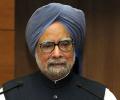
Singh, who opened up the economy as finance minister and served as prime minister for two consecutive terms, died on Thursday at the age of 92. "History will forever honour his pivotal role in the transformative 1991 reforms that reshaped India and opened its doors to the world.

Dubai is positioning itself as a springboard for Indian companies looking to tap into fast-growing emerging markets, including Africa, banking on low tariffs, long-standing trade relations, and a shared vision for regional economic growth, said Mohammad Ali Rashid Lootah, president and chief executive officer, Dubai Chambers, at the Dubai-India Business Forum in Mumbai.

Tata Electronics has surpassed Taiwanese giant Foxconn in assembling iPhones for export from India during the FY22-FY26 PLI scheme period, with exports valued at $26.3 billion compared to Foxconn's $25.6 billion.

Domestic rating agency ICRA on Monday said Indian companies are likely to clock 7-8 per cent revenue growth during the March quarter of the current fiscal year, led by revival in rural demand and uptick in government spending. ICRA expects the private capital expenditure (capex) cycle to remain measured in view of the uncertainties around geopolitical developments and relatively subdued outlook on merchandise exports from India.

Finance Minister Nirmala Sitharaman on Tuesday sought to know from industry what is holding it back from investing in manufacturing, even though foreign investors show confidence in India. Drawing parallel between India Inc and mythological character 'Hanuman', Sitharaman said the government is willing to engage with the industry and take policy action. "This is the time for India... We cannot miss the bus," she added.

The revenue growth of Indian companies for the July-September quarter is estimated to be 5-7 per cent year-on-year (Y-o-Y), marking the slowest growth in 16 quarters, rating agency CRISIL said on Thursday.

Knowledge workers and mid-career professionals in India are hopeful that artificial intelligence will positively impact their roles, even as concerns about job displacement persist, especially among younger professionals, a top official of a human capital management solutions provider has said. At a time when AI has become a critical part of an organisation's functioning, many professionals see the positive possibilities of AI.

With short-term rates firming up due to tight liquidity conditions, Indian corporates are opting to borrow long term to take advantage of the attractive rates by locking them in these uncertain times. The banking system has a liquidity deficit of over Rs 2 trillion. According to market participants, engineering conglomerate Larsen & Toubro (L&T) raised Rs 1,500 crore through 10-year bonds in December 2024.

The more things change, the more they remain the same for corporate India. In the April-June 2025 period (Q1FY26) - for the ninth consecutive quarter - listed companies witnessed only single-digit revenue growth, while their core earnings, excluding other income and one-time gains, contracted for the second time in four quarters. This comes as firms brace for the impact of 50 per cent US tariff on Indian goods.

Beyond imprisonment, candidates caught cheating face cancellation of examination scores, blacklisting under China's social credit system and multi-year bans from appearing in state examinations.
As India marks a decade of the Goods and Services Tax (GST), the focus is shifting towards enhancing efficiency through artificial intelligence, data sharing, and process simplification. The reform, which unified India's indirect tax system, has significantly broadened the tax base and boosted revenues, with future plans including a streamlined two-tier rate structure and continued technological integration to reduce compliance costs and combat evasion.

'The answer is not for me to give. The answer either way has to be heard from the industry itself. Tell us why not if you are not doing it; tell us if you are doing it -- why should this question remain unanswered?'

The Delhi High Court has issued an interim order for the removal of the film 'Kala Hiran: The Battle for Legal' teaser and related online posts, following objections from actor Salman Khan regarding the unauthorised use of his name, mannerisms, and reputation for commercial gain.

Deloitte India has partnered with IIT Bombay to launch a Quantum Technology Centre, aiming to accelerate quantum adoption, research, and enterprise use-cases for Indian businesses.

'In India, managers and the leadership almost glorify overworking.'

Indian companies are increasingly opting for demergers, with 29 deals valued at over $40 billion in 2025 alone, marking a 10-year high, as promoters and boards recognise that markets favour focused businesses over complex conglomerates.

IPOs have been the flavour of the season for some time. But the coming together of three mega IPOs, from diverse businesses and historic relevance, could tell a story that's still in the making, points out Nivedita Mookerji.

Congress leader Rahul Gandhi told INDIA bloc leaders that despite public anger indicating a win for the opposition, the main challenge is the alleged lack of free and fair elections due to the BJP's control over state institutions. He urged unity and a strategy of 'resistance' against what he termed election 'theft'.
Indian corporates collectively raised over Rs 17,500 crore from the domestic debt capital market through bond issuances on Tuesday. The issuances were led by Bharti Telecom's Rs 10,500 crore fundraise in two tranches, the largest by an Indian company in the domestic market so far in FY26.

The recent surge in crude oil prices could shave off the gains made by India Inc in profit margins in the past few quarters. Worse, it comes at a time when consumer demand in the country is slipping and major global economies are witnessing a slowdown. A back-of-the-envelope calculation suggests that the margin expansion accounted for three-fourths of the rise in the listed firms' operating profit between the April-June quarter (Q1) of FY23 and Q1FY24, and only a quarter of profits gains came from revenue growth.

'In the new coalition government, India's reform agenda may prioritise job creation and factor market reforms.'

State-owned enterprises in India are projected to significantly increase their overseas borrowings, potentially exceeding $15 billion in FY27, driven by the Reserve Bank of India's new concessional forex swap facility which offers a 3 per cent funding-cost advantage.

Investments under the framework would remain voluntary for employees.

Nebex, founded by former Axiom Space executives, aims to build commercial infrastructure for the global space economy.
